Office Address

  • Department of Earth and Environmental Sciences IISER Campus, Knowledge city Sector 81, SAS Nagar (Mohali) P.O Manauli India. PIN 140306
  • headees@iisermohali.ac.in

Social List

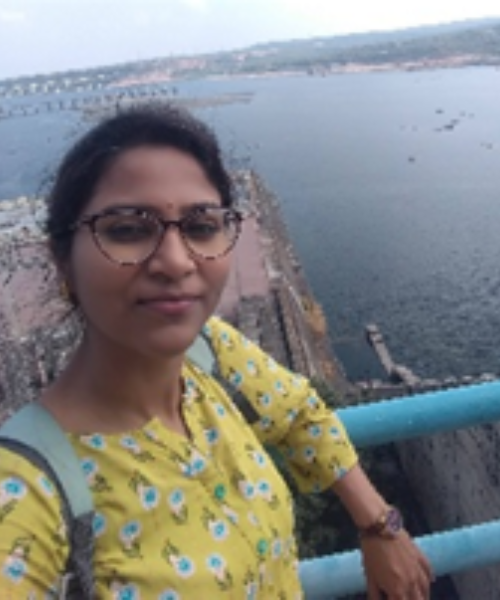
Dr. Jyotima Kanaujia

Assistant Professor
  • Research Group: Department of Earth and Environmental Sciences IISER Mohali
  • Office: AB-1 1F8
  • Email: jyotima@iisermohali.ac.in

About


Dr. Jyotima Kanaujia is an Assistant Professor in the Department of Earth and Environmental Sciences at the Indian Institute of Science Education and Research (IISER) Mohali. She works in the field of quantitative and computational seismology, with a primary focus on understanding earthquake processes, lithospheric structure, and tectonic dynamics through advanced data analysis and numerical modelling.

Her research integrates seismic observations, physics-based modelling, and high-performance computational methods to investigate crustal deformation, fault mechanics, and seismic hazard. A significant component of her work focuses on the Himalayan region, particularly the structural and mechanical behaviour of the Main Himalayan Thrust. She is also engaged in research on seismic anisotropy, temporal velocity variations, intraplate and continental deep earthquakes, and the application of machine learning techniques in large-scale seismic data analysis.

Dr. Kanaujia’s work emphasizes reproducible research practices, rigorous quantitative interpretation, and the development of computational frameworks for handling large seismic datasets. She is committed to building a strong research ecosystem that integrates field observations, theory, and data-driven science.

In addition to research, she teaches core and advanced courses in Solid Earth Geophysics, Introduction to Earth Sciences, Climate Data Analysis, and Science Communication. Her teaching philosophy is rooted in conceptual clarity, quantitative reasoning, and connecting theoretical principles with real geophysical observations.

Research

My research focuses on computational and quantitative seismology, aimed at understanding earthquake processes, lithospheric structure, and tectonic deformation through integrated data-driven and physics-based approaches. The central objective is to extract physically meaningful constraints on Earth structure and fault mechanics from large seismic datasets using robust analytical and numerical frameworks.

A significant component of my work investigates the Himalayan orogenic system, with particular emphasis on imaging the geometry and mechanical behaviour of the Main Himalayan Thrust (MHT). Using techniques such as Seismic tomography, seismic anisotropy analysis, receiver functions, ambient noise tomography, and waveform modelling, my research seeks to constrain crustal structure, strain localization, and the role of inherited structures in controlling seismicity.

I also work on temporal seismic velocity variations and anisotropic signatures as potential indicators of stress evolution and crustal fluid interactions. These studies contribute to a deeper understanding of earthquake preparation processes and lithospheric dynamics.

Methodologically, my research integrates high-performance computing, numerical simulations, inverse modelling, and increasingly, machine learning techniques for large-scale seismic data analysis. Emphasis is placed on reproducibility, quantitative uncertainty estimation, and the physical interpretation of seismic observables.

Through the Computational Seismology Lab, the goal is to develop a rigorous and computationally advanced research program that bridges observational seismology, tectonics, and geodynamic modelling.

People

Research Group Members

Research Supervision (Present Status)

  • Ph.D. Students: 01
  • Postdoctoral Fellows: 01
  • Total Research Personnel Currently Working: 02

Postdoctoral Researcher

  • Dr. Monumoy Ghosh (IPDF)
    Postdoctoral Fellow
    Joined: October 2025

Doctoral Student

  • Ms. Nisha Sharma (IPhD)
    Ph.D. Scholar
    Joined: January 2016

Alumni


Nil

Publications

Publications in SCI-Indexed Journals

Published/ Accepted

  1. Roy, S. K.*, Devi, A., Kanaujia, J., and Kumar, M. R. (2025). Variations in the mantle flow beneath the Eastern Himalaya inferred from shear wave splitting. Physics of the Earth and Planetary Interiors, 363, 107364.
  2. Kanaujia, J.*, Kumar, M. R., Naresh, B., and Vijayaraghavan, R. (2025). Tomographic evidence for segmentation of the Main Himalayan Thrust in the Uttarakhand Himalaya. Tectonophysics, 900, 230655.
  3. Kanaujia, J.*, Kumar, M. R., Kumar, V. P., and Shekhar, M. (2025). Indication of fluid-driven seismicity in the Palghar region, India from local earthquake tomography. Bulletin of the Seismological Society of America, 115(2), 489–504.
  4. Kanaujia, J * and G. Surve, (2024). Upper Mantle deformation beneath the Northeastern part of Indian plate, Geo-Marine Letters, 44, 1.
  5. Arti Devi, Sunil K. Roy*, Kanaujia, J, M. Ravi Kumar, (2024). Evidence for weak azimuthal Anisotropy beneath the Kumaon-Garhwal Himalaya, Geophysical Journal International, Volume 237, Issue 3, June 2024, Pages 1734–1750.
  6. Sunil Roy*, M. Ravi Kumar, Kanaujia, J, Sandeep Gupta, Bhoopendra Singh, Prantik Mandal, D. Srinagesh, (2024). Insights into the mechanisms forging seismic anisotropy in the upper mantle beneath India, Tectonophysics, 888(8), 230454.
  7. Pavan Kumar Vengala*, Srinagesh Davuluri, Prantik Mandal, Kanaujia, J, Naresh B., P. Solomon Raju, (2023). Mapping of Stress and Structure controlled upper crustal anisotropy in Kumaon-Gharwal Himalaya, Physics of the Earth and Planetary Interiors.
  8. Kanaujia, J*, M. Ravi Kumar, T. C. Sunilkumar, B. Naresh, Arti Devi, R. Vijayaraghavan, G. Suresh, Satish Saha, D. Srinivas, P. Solomon Raju, (2023). Nature of the Himalayan Seismicity Belt in the Garhwal-Kumaun segment and its Tectonic implications, Seismological Research Letters. 95, 2386–2398.
  9. Kanaujia, J*, M. Ravi Kumar, R. Vijayaraghavan, and P. Solomon Raju, (2023). An optimum 1D velocity model for the Garhwal-Kumaun Himalaya using Monte-Carlo style inversion. Seismological Research Letters, 94 (5), 2244–2256.
  10. Surve G.*, Kanaujia, J, Sharma N., (2021). Probabilistic Seismic Hazard Analysis studies for Mumbai, Natural hazards, 107, 575–600.
  11. Dey S., D. Powali, J. Chaudhury, M. Ghosh, R. Mondal, Kanaujia, J, S. Mitra*, (2019). 28 August 2018 (Mw 4.5) Bengal Basin earthquake highlights active basement fault beneath the sediments, Current Science, 116(10), 1633-1636.
  12. Kanaujia, J *, S. Mitra, S. C. Gupta, M. L. Sharma, (2019). Crustal anisotropy from shear-wave splitting of local earthquakes in the Garhwal Lesser Himalaya, Geophysical Journal International, 219(3), 2013-2033.
  13. Kanaujia, J*, A. Kumar, S. C. Gupta, (2016). 3-D velocity structure around Tehri region of the Garhwal lesser Himalaya: constraints on geometry of the underthrusting Indian plate, Geophysical Journal International, 205, 900-914.
  14. Kanaujia, J*, A. Kumar., S. C. Gupta, (2015). 1-D velocity structure and characteristics of contemporary local seismicity around Tehri region-Garhwal Himalaya, Bulletin of Seismological Society of America, 105(4), 1852-1869.
  15. Chakraborty, S., Tewari, S., Akhaury, G., Kanaujia, J., (2011). “Raga Analysis Using Entropy”, Journal of acoustic society of India, 38 (4), 168-172.

Book Chapter

  1. Kanaujia J.*, (2022). Deep earth Imaging: An application of Seismic wave (Travel time inversion), Chapter 1, In book “Recent Developments in using Seismic Waves as a Probe for Subsurface Investigations: Theory and Practices”, CRC Press, Taylor & Francis.
  2. Kanaujia J.* (2025). Multideciplinary Approaches to Earthquake precursor: Analysing Geophysical, Geochemical and Geodetic Indicators IN book “Recent Advancements in Diagnosing Seismic Precursors: Theory and Practices”, book series Springer Geophysics, Springer Nature Switzerland AG, Gewerbestrasse 11, 6330 Cham, Switzerland (In Press).
  3. M. Ravi Kumar*, Kanaujia J. (2025). Structural Controls on Seismicity in the Himalaya, In the edited thematic book “The Himalayan Geohazards”, published by Springer Nature (Submitted).

* Corresponding Author

Full Papers (Presented) in reputed conferences

  • Jyotima Kanaujia, S. Mitra, A. Kumar, S. C. Gupta, M. L. Sharma, (2018), Seismic Crustal Anisotropy at Garhwal Lesser Himalaya, 16th Symposium on Earthquake Engineering, IIT Roorkee, December 20-22, 2018, IIT Roorkee, Roorkee, India.
  • Jyotima Kanaujia, A. Kumar, S. C. Gupta, (2016), Mapping the crustal thickness in Garhwal Himalaya using Moho reflected seismic phases, 6th International Conference on Recent Advances in Geotechnical Earthquake Engineering and Soil Dynamics (ICRAGEE), August 1-6, 2016, IIT Roorkee Ext. center, Noida.
  • Jyotima Kanaujia, Aswani Kumar, S.C. Gupta, (2012), 1-D crustal model of the Garhwal lesser Himalaya from local earthquake observations, Proceedings at Golden Jubilee Symposium of Indian society of Earthquake Engineering, October 20-22, 2012 Indian Institute of Technology Roorkee, Roorkee, India.

Abstracts (Presented) in reputed conferences

International:

  • Jyotima Kanaujia, Surve G., Hazarika N., (2020), Upper Mantle Deformation Patterns Beneath Northeast India from Shear-Wave Splitting Analysis, EGU2020-4694, Europen Geophysical Union, General assembly 2020, Vienna, Austria, May 3-8, 2020. (Presented on May 7, 2020, online presentation).
  • Jyotima Kanaujia, Surve G., Hazarika N., (2019), Probabilistic Evaluation of Seismic Hazard in North Eastern India, eposter session, AGU fall meeting (online) 2019, Sac Francisco, USA, Dec 09-13, 2019.
  • Jyotima Kanaujia, Supriyo Mitra, (2019), Upper mantle anisotropy beneath Sikkim Himalaya from shear-wave splitting analysis, Geophysical Research Abstracts, EGU General Assembly 2019.
  • Jyotima Kanaujia, Supriyo Mitra, (2018), Modeling Moho dip and crustal anisotropy using receiver function analysis beneath Jammu and Kashmir Himalaya, Geophysical Research Abstracts, EGU General Assembly 2018, Vienna, Austria, Vol. 20, 2018, EGU2018-946.
  • Jyotima Kanaujia, A. Kumar, S. C. Gupta, (2014), characteristics of local seismicity in Garhwal lesser Himalaya, Abstract in 10th Asian Seismological Commission General assembly, November 21-24, 2016, Manila, Philippines.

National:

  • Jyotima Kanaujia, Supriyo Mitra, S. C. Gupta, M. L. Sharma, (2018), Seismic anisotropy observations from Local earthquakes in the Garhwal Lesser Himalaya, National Conference on Emerging Trends in Geophysical Research for Make-in-India, ETGRMI2018 abstract Volume, 2018.
  • Jyotima Kanaujia, Supriyo Mitra, S. C. Gupta, M. L. Sharma, (2017), Seismic anisotropy observations from Local earthquakes in the Garhwal Lesser Himalaya, Indian Geophysical Union, 54th Annual Convention of IGU, 54, 2017, 71.
  • Jyotima Kanaujia, A. Kumar, S. C. Gupta, (2014), “Vp/Vs ratio and Poisson’s ratio of the parts of Garhwal Himalaya”, Abstract published in Proceedings at International Workshop and 3rd Annual convention Advances in Earthquake Sciences-2014, January 4-6, 2014, Indian Seismological Research Institute (ISR), Gandhinagar, Gujarat, India.

Courses

  • EES 418 – Solid Earth Geophysics
    Advanced undergraduate/BS-MS level course covering Earth’s internal structure, mantle convection, plate tectonics, seismic wave propagation, gravity field of the Earth, and related geophysical principles.
  • EES201 – Introduction to Earth Sciences
    Foundational undergraduate course introducing the Earth system, planetary formation and differentiation, Earth’s interior, plate tectonics, structural geology, earthquakes, and volcanism.
  • EES405 – Climate Data Analysis
    Course focused on quantitative analysis of climate datasets, statistical methods, time-series analysis, and interpretation of observational and model-based climate data.
  • IDC 352 (EES) – Basics of Science Communications
    Interdisciplinary course designed to develop skills in scientific writing, presentation, public communication of science, and critical evaluation of scientific information.

Lab Facilities

Computational Seismology Lab

Department of Earth and Environmental Sciences
Indian Institute of Science Education and Research (IISER) Mohali

Lab Research Overview

The Computational Seismology Lab focuses on quantitative and physics-based investigation of earthquake processes and lithospheric structure using advanced computational methods. The lab integrates seismic observations, numerical modelling, and data-driven approaches to study crustal deformation, fault mechanics, and seismic hazard.

Current research themes include:

  • Seismic imaging of the Himalayan lithosphere, with emphasis on the Main Himalayan Thrust
  • Ambient seismic noise analysis for crustal structure and aquifer stress monitoring
  • Seismic anisotropy and temporal velocity variations associated with tectonic processes
  • Computational modelling of earthquake source dynamics
  • Application of machine learning in large-scale seismic data analysis
  • Intraplate and continental deep earthquake processes

The lab emphasizes reproducible computational workflows and high-performance analysis of large seismic datasets.

In-house Research Facilities
Instrument Make / Model Primary Utility Technical Capability
Broadband Seismometer Kinemetrics (Model: MBB-2 Miniature 120s BroadBand Seismometer) Recording broadband ground motion for local, regional, and teleseismic earthquakes. Used for crustal imaging, source studies, and tectonic investigations. High dynamic range; wide frequency bandwidth; low self-noise; suitable for permanent and temporary deployments.
Distributed Acoustic Sensing (DAS) System Kinemetrics DAS (Model: Pebble three component datalogger) Fiber-optic based dense seismic monitoring for high spatial resolution measurements. Suitable for near-surface imaging and structural monitoring. Dense spatial sampling along fiber length; real-time acquisition; high temporal resolution; scalable deployment.
Dedicated Computational Server High-performance multi-core Master and compute server Large-scale seismic data processing, waveform inversion, numerical simulations, and parallel computing tasks. Multi-core CPU architecture; high RAM capacity; optimized for parallel processing; suitable for HPC-based geophysical modelling.
Network Attached Storage (NAS) Server Enterprise-grade NAS system Secure storage, backup, and archival of seismic datasets and modelling outputs. Redundant storage configuration (RAID); high data throughput; multi-user access; scalable storage architecture.
High-End Computational Workstations (6 Units) Custom-built scientific workstations Data visualization, waveform analysis, machine learning workflows, and routine computational tasks. High-performance CPUs/GPUs; large RAM; optimized for geophysical modelling, inversion, and AI/ML applications.
Opportunities

The Computational Seismology Lab welcomes applications from motivated students (MS, PhD, and Postdocs) and researchers interested in quantitative seismology, computational modelling, and data-driven Earth science research. Prospective candidates may contact the PI with a CV and research statement.

Additional Info

Professional Appointments

  • Assistant Professor, Indian Institute of Science Education and Research (IISER) Mohali
    March 2025 – Present
  • DST INSPIRE Faculty, Madan Mohan Malaviya University of Technology, Gorakhpur
    June 2024 – February 2025
  • Project Scientist, CSIR–National Geophysical Research Institute (CSIR–NGRI), Hyderabad
    October 2021 – May 2024
  • Postdoctoral Researcher, Indian Institute of Geomagnetism, Mumbai
    2019 – 2021
  • Postdoctoral Researcher, IISER Kolkata
    2017 – 2019

Selected Scientific Contributions

  • Tomographic imaging and structural segmentation of the Main Himalayan Thrust in the Uttarakhand Himalaya.
  • Quantitative characterization of crustal and upper mantle anisotropy across segments of the Himalayan arc.
  • Development of optimized 1D and 3D velocity models using Monte Carlo–based inversion techniques.
  • Integrated analysis of seismicity distribution and tectonic deformation in the Himalayan seismic belt.

Research Grants and Fellowships

  • DST INSPIRE Faculty Award, Department of Science and Technology, Government of India (2023)
  • Nana Bhoy Moos Research Fellowship, Indian Institute of Geomagnetism, Mumbai (2019)
  • DST–SERB National Postdoctoral Fellowship (2017)

Gallery

Nil